 |
'Once as we were walking up the Champs Elysées together, I pointed to a beautiful white goat harnessed to a children's cart and said how much I admired these courageous and inquisitive creatures. Joyce fully agreed and stopping to contemplate the stately little animal, said he couldn't understand why the goat had been selected as a satanic symbol. 'Hircus Civis Eblanensis.' There was a good deal of the surefootedness and toughness of the mountain goat in Joyce's own composition.'
Frank Budgen 'Further Recollections of James Joyce', Partisan Review, 1956
'We reached the zoo, and Joyce declared that he didn't care much for the animals; only cats and goats appealed to him....The goats entertained him highly with their pranks.'
Ole Vinding, 'Joyce in Copenhagen', Portraits of the Artist in ExileJames Joyce loved goats, which caper through the pages of his books, especially Finnegans Wake. Goats are individualists and anarchists. Joyce identified with their independence and stubbornness.
Joyce liked goats so much that he even grew a goatee beard!
'Shem's bodily getup, included...a trio of barbels from his megageg chin.' 169.11
'Megageg' is the bleating sound made by a goat. So here Joyce is explicitly comparing his own beard with a goat's.

GOATS VS SHEEP
Here's a photo of a flock of sheep and goats I saw in Alonissos, in Greece. The timid conformist sheep are keeping to the safe level central ground, while the bold inquisitive goats are exploring the edges.

Joyce preferred goats to sheep, reversing the position of Jesus Christ, in the gospel of Matthew:
Matthew 25 32-41
 |
| Christ saves the sheep and damns the goats |
If you look up the Matthew passage online, you'll find lots of Christian writing explaining why Jesus preferred sheep to goats. They often repeat the saying 'Shepherds protect sheep from their environment, whereas goatherds protect the environment from their goats.'

In Finnegans Wake, there are more than thirty uses of the goat/sheep motif, which you can read here in fweet. Shem the Penman, the artist, is the goat. The conformist Shaun the Post is the sheep.
'I AM NOW HOPELESSLY WITH THE GOATS'

Here's the Exagmination, a 1929 defence of Work in Progress overseen by Joyce, who picked the title. Richard Ellmann says that 'The spelling of Exagmination was to claim its etymological derivation from ex agmine, a hint that his goats had been separated from the sheep.'
When the Exagmination came out, Joyce wrote a letter to Valery Larbaud in which he parodied Christ's words damning the goats, applying them instead to the sheep:
'I am now hopelessly with the goats and can only think and write capriciously. Depart from me ye bleaters, into everlasting sleep which was prepared for Academicians and their agues!'
To Valery Larbaud, 30 July 1929, Letters 1, 284
The bleating sheep were the enemies of Work in Progress. Joyce's chosen goats were the Exagmination's twelve writers (a parallel with Christ's apostles).
 |
| This goat I photographed in Ithaca tried to steal our sandwiches |
'A HELL OF LECHEROUS GOATISH FIENDS'
In A Portrait, Stephen Dedalus, terrified of the hellfire sermon, temporarily joins the sheep and denies his goat nature. This vivid surreal scene is the only negative description of goats I can find in Joyce's writing:
For the rest of his life, James Joyce identified with the goats.
SCAPEGOATS
 |
| Holman Hunt's The Scapegoat, 1854-6 |
Shem is also a scapegoat, the goat sent into the wilderness carrying the sins of the people, described in Leviticus 16:7-22:
'And he shall take the two goats, and present them before the Lord at the door of the tabernacle of the congregation. And Aaron shall cast lots upon the two goats; one lot for the Lord, and the other lot for the scapegoat. And Aaron shall bring the goat upon which the Lord's lot fell, and offer him for a sin offering. But the goat, on which the lot fell to be the scapegoat, shall be presented alive before the Lord, to make an atonement with him, and to let him go for a scapegoat into the wilderness....And the goat shall bear upon him all their iniquities unto a land not inhabited: and he shall let go the goat in the wilderness.'
Here is Shaun describing his brother:
'my allaboy brother...whom 'tis better ne'er to name, my said brother, the skipgod expelled for looking at churches from behind'. 488.22
skipgod = scapegoat and the goat that skips being offered as a sacrifice for the Lord
R.J. Schork argues that HCE is a Mosaic scapegoat and a Roman comedy lecherous billygoat. See his wonderful 1993 article 'Sheep, Goats, and the Figura Etymologica in Finnegans Wake' which is online here.
'sindbook for all the peoples' 229.32
'their sindybuck that saved a city' 412.35
When the cad first appears, he is carrying 'his overgoat under his schulder, sheepside out' (35.13). 'Schuld' is guilt in German.
'THE FIRST MAN OF DUBLIN WAS A HE-GOAT'
In the Anna Livia chapter, the washerwomen describe Earwicker as a he-goat, suckling Shem and Shaun.
Hircus Civis Eblanensis! He had buckgoat paps on him, soft ones for orphans. Ho, Lord! Twins of his bosom. 215.27
The Latin name means 'Goat Citizen of Eblana', a term used by Ptolemy in his Geography, later identified by antiquarians with Dublin. Joyce must have talked about this line with Frank Budgen, who related it to the white goat in the Champs Elysées above.
Joyce gave an extraordinary gloss on this passage to C.K.Ogden:
Again the letters of Haveth Childers Everywhere.'
The male suckling is from an ancient Irish ritual. In his Confession, St Patrick writes of an encounter with Irish sailors: 'I refused to suck their nipples because of my reverence for God.'
In the lessons chapter, we learn that one name of the pub is 'The Goat and Compasses' (275.16), in which the goat stands for HCE and the compasses for the 'geomater', Anna Livia.
A GLASS OF GOAT'S MILK
 |
| The first man of Dublin? |
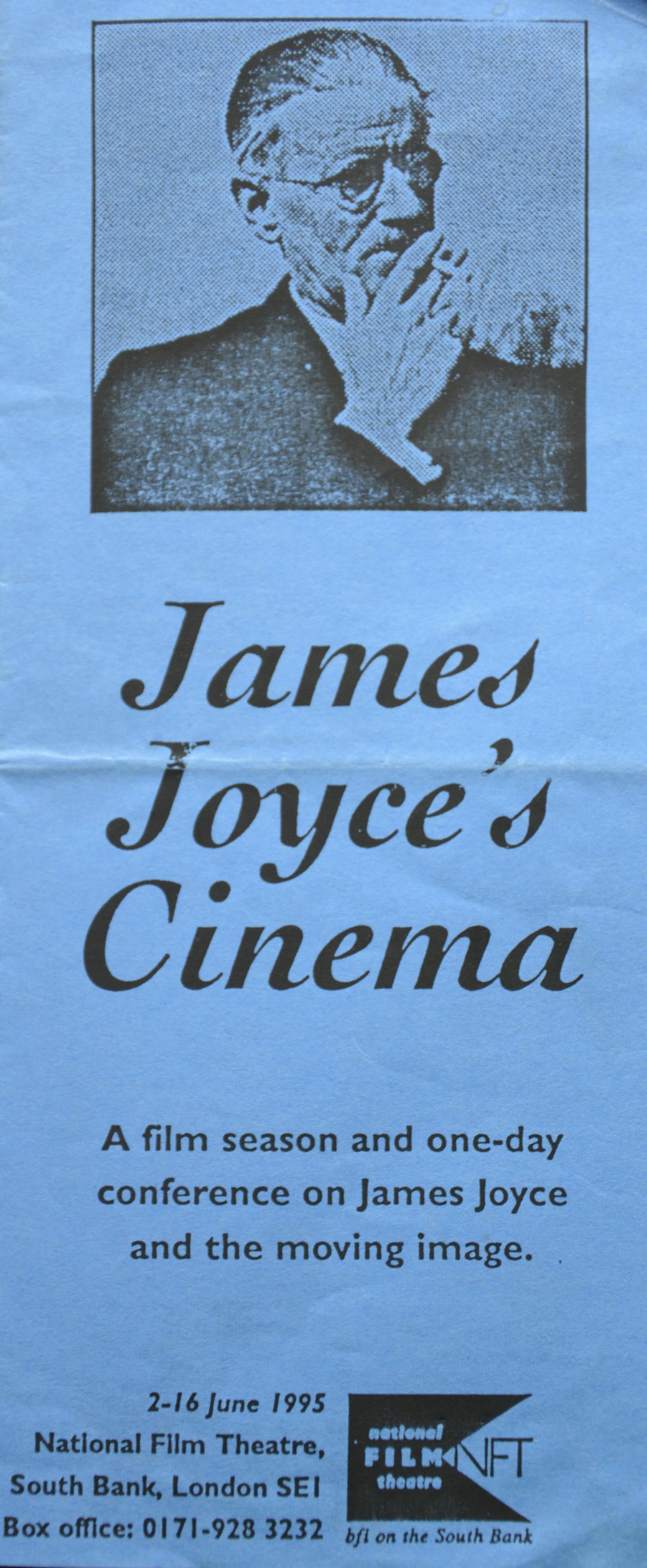
I saw this, with piano accompaniment, at the National Film Theatre on Bloomsday in 1995, when it was part of a programme of films, curated by Luke McKernan, from the Volta (left). It was the only film I could imagine Joyce personally choosing for the programme. The other films were Italian, and probably chosen by Joyce's partners from Trieste.
After reviving at his wake, Tim Finnegan told to stay lying in his coffin, is promised funerary offerings, including a glass of goat's milk:
'And we’ll be coming here, the ombre players, to rake your gravel and bringing you presents, won’t we, fenians?...and some goat’s milk, sir, like the maid used to bring you. ' 24.35
THE GOAT KING OF KILLORGLIN

My favourite goat in Finnegans Wake makes an appearance as a 'litigant' in the Festy King trial on pages 85-92. Festy King was a real name, but Joyce also plays with the word king as title, bringing in a comic group of Irish kings:
'The litigants, he said, local congsmen and donalds, kings of the arans and the dalkeys, kings of mud and tory, even the goat king of Killorglin, were egged on by their supporters' 87.24-26
There really is a Goat King of Killorglin, chosen every year at the Puck Fair in Killorglin, County Kerry. Here's a lovely film about the ceremony.
THE NANNYGOAT ON BEN HOWTH
In Ulysses, the only witness of Bloom and Molly's lovemaking on Ben Howth is a surefooted nannygoat:
'She lay still. A goat. No-one. High on Ben Howth rhododendrons a nannygoat walking surefooted, dropping currants. Screened under ferns she laughed warmfolded. Wildly I lay on her, kissed her: eyes, her lips, her stretched neck beating, woman’s breasts full in her blouse of nun’s veiling, fat nipples upright. '
The goat has a speaking role in the Circe episode:
(High on Ben Howth through rhododendrons a nannygoat passes, plumpuddered, buttytailed, dropping currants.)
THE NANNYGOAT: (Bleats.) Megeggaggegg! Nannannanny!'
Ellmann has this curious footnote:
'Drinking with Weiss, Joyce remarked that he liked women to have breasts like a she-goat's. In Ulysses, Bloom looks at his wife's 'large soft bulbs, sloping within her nightdress like a shegoat's udder,' and later remembers how in their first embraces on Ben Howth a nanny-goat walked by them.'
James Joyce, p 464
Old Irish Goats have now been reintroduced to Howth, by the Old Irish Goat Society, creating a perfect opportunity to reenact the big kiss scene.

LOOKING FOR OLD IRISH GOATS IN HOWTH
Lisa and I were in Dublin last week, for the big Bloomsday celebrations. On 15 June, we had day out in Howth, where I hoped to see some of the Old Irish Goats.
We made boat trip in the Little Flower (Ireland's smallest and oldest passenger ferry) to Ireland's Eye


Back on Howth Head, it was a perfect weather for goat spotting
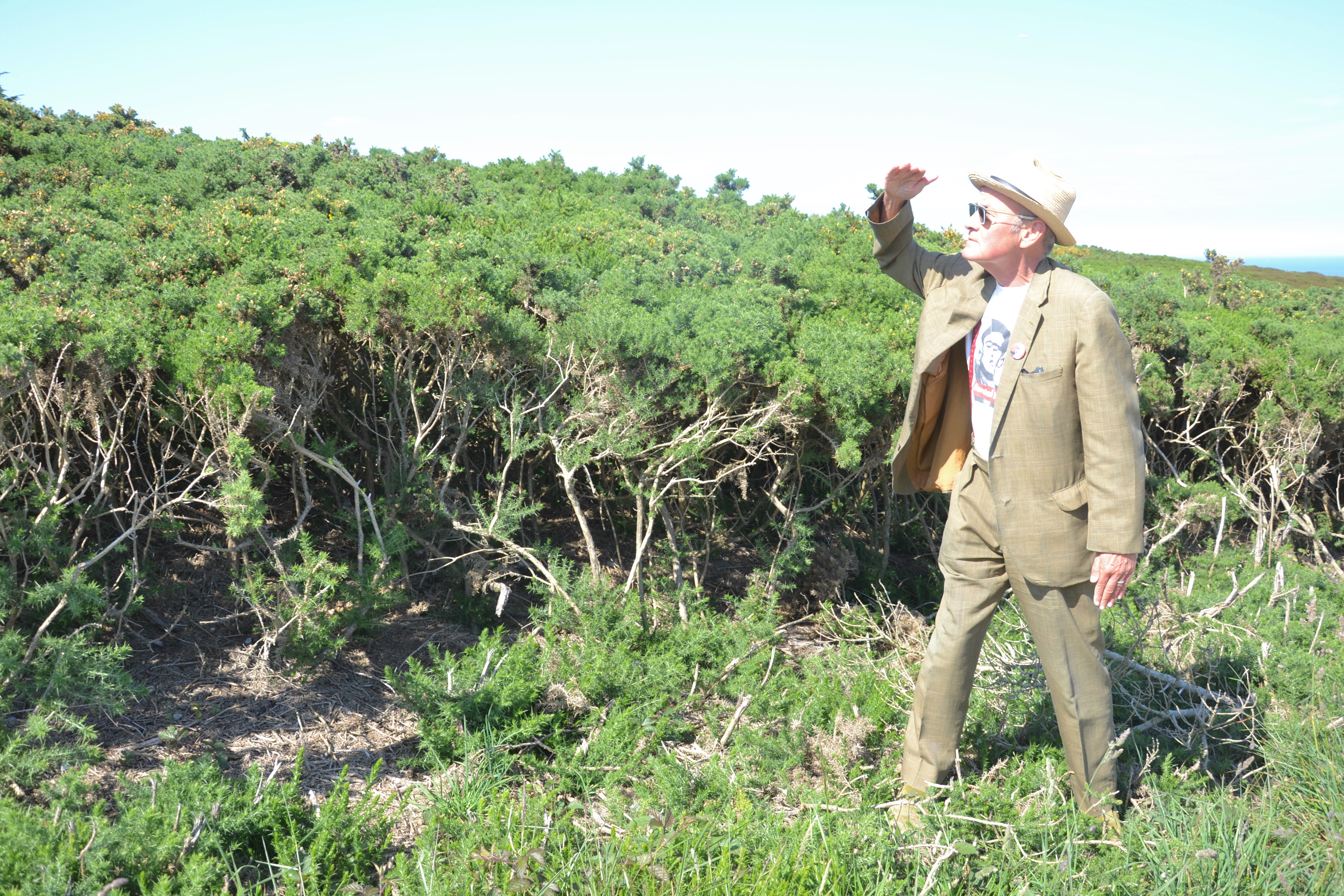
The view south to Dalkey Island (which also has wild goats)

Here's the Bailey Lighthouse

We saw two llamas

But there was no sign of any goats!

After our day out, I learned on twitter that the Old Irish Goat Society had staged their own photo renactment with a magnificent goat. On Instagram, they posted film of of the shoot with this description:
 |
| picture and report from Irishcentral.com |
When I mentioned my own failure to find a goat, they tweeted a kind invitation to give me a private tour.

Unfortunately, we'd already gone south to Bray by this time.
I did find a sheep in Dublin, at F.X.Buckley's (Wakean name!) butcher shop in Talbot Street.
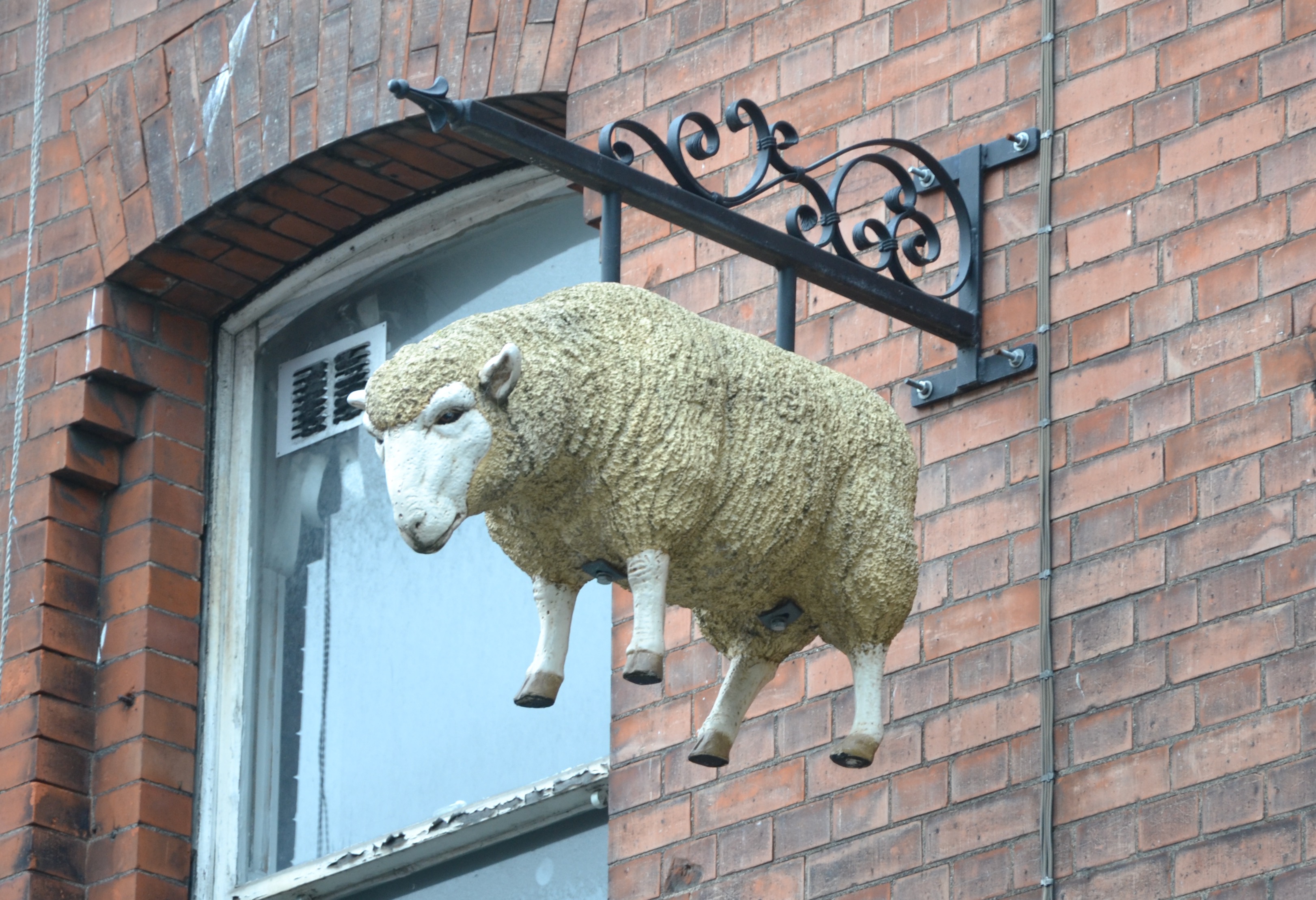
But the only goat I saw was this one on the wall of Sheridans the cheesemongers...
.jpeg)


