Going to the symposium last week reminded me of J.S.Atherton's wonderful lecture, 'The Identity of the Sleeper', which he gave at the very first James Joyce Symposium, at the Gresham Hotel, on Bloomsday in 1967.
James Stephen Atherton (1910–85) was an English scholar, from Wigan, whose 1959 work, The Books at the Wake, is my favourite of all the critical works on Finnegans Wake. He's also the subject of Dottir of her Father's Eyes, the graphic memoir by his daughter, Mary Talbot, illustrated by Bryan Talbot.

Here's the text of Atherton's lecture, as given in A Wake Newslitter Vol IV no 5, October 1967.
'I do not wish to deny any of the theories which have been put forward as to the identity of the dreamer: they are all true up to a point. For, as I see FW it is everyone’s dream, the dream of all the living and the dead. Many puzzling features become clear if this is accepted. Obviously we will hear many foreign languages: Chinese will be prominent if we know Chinese; German if we know German, and so on. The Wake never stops: the last sentence circles round to become the first and the whole work revolves to reflect the nature of the world of sleeping humanity which travels around with the dark side of the globe—“the owl globe” (6.29), that is to say the dark side, where the bird of night flies, “wheels in view”. So it is that Shaun, about whom we are all dreaming, can be told, “thou art passing hence, … ere the morning of light … to the inds of Tuskland … ” (427.18), and we visit, or seem to hear from Australia, America, and New Zealand. This is the space aspect.
Now for the time aspect. Joyce wrote in Scribbledehobble, “Dream thoughts are wake thoughts of centuries ago.” Shakespeare’s thoughts, Dante’s thoughts, circle around in the Wake along with those of all other writers. Each of the characters we are dreaming of shifts and changes, for they are made up by and of all characters; yet “There are in a way no characters. It’s like a dream.” So Joyce told a journalist named Vinding in Copenhagen (Ellmann, 709). He seems to have seen himself as catching these drifting fragments and combining them, “sewing a dream together” (28.7), as one of his characters says. And I must mention little Nuvoletta who “made up all her myriads of drifting minds in one”. (159.7).
To my mind, the most revealing statement Joyce ever made about his work was: “Really it is not I who am writing this crazy book. It is you, and you, and you, and that man over there, and that girl at the next table.” (Givens, p.13, quoted Kenner, Dublin’s Joyce, p.327). This is stressed, once you start looking for it, in the Wake itself. It is “us.” who are brought back to “Howth Castle and Environs” in the third line of the book. The washerwoman says: “of course, we all know Anna Livia”. It is easy to miss the “we”. Chapter 2 has “we are back” in line 3. In fact all the first five chapters use “us” or “we” by the ninth line at the latest—and the sixth chapter ends “Semus sumus.” We are Shem. All of us. The phrase “us, the real Us” occurs twice (62.26; 446.36); and when one episode ends it is “we” who are left “once amore as babes awondering” (336.16) .Joyce wrote to T. S. Eliot about “the marvellous monosyllable” SIC he had added to the margin beside “Whom will comes over.” (260.4), and the first line of this chapter is “As we there are … ” In fact the Wake is an event in which “the all gianed in with the shoutmost shoviality” (6.18). You expect it to say “They all” and rnost people read it as “They all”, but it is “the all” that Joyce wrote: everybody joined in.
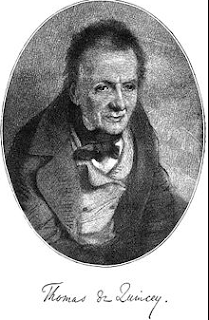
Frank Budgen has written that a dream he once described to Joyce seemed to him to have started Joyce off on the theme of the Wake. It seems likely to me that Mr. Budgen is right; I am certain that Joyce wanted him to think that his dream was in the Wake, for he wanted all dreams to be there. Budgen gives, in his James Joyce and the Making of Ulysses, a quotation from De Quincey’s The English Mail Coach: “In’ dreams …each child of our mysterious race completes for himself the story of the original fall.” I am sure that Joyce suggested the extract to him, for it should read “treason” not “story”, and “treason” would not fit into Joyce’s view of the fall.
The obvious reaction in the 30’s to such a theory was to say that it was simply Jung’s “collective Unconscious.” Joyce indignantly denied this and has been taken as denying that his book concerns the collective unconscious. What he was denying was any influence from Jung for he saw the theory as much older than Jung. There is not time to discuss his sources, partly Eastern writings, partly from Yeats. Certainly Joyce read with interest everything Jung wrote including the references to “Images in the great memory stored” or “out of Anima Mundi”, and knew the importance Yeats assigned in “Towards Break of Day” to the sharing of a dream between two people. It was this aspect of Yeats’s work Joyce most admired, the Yeats who wrote that “the borders of our minds are always shifting, tending to become part of the universal mind.” And Joyce’s use of Yeats has never been adequately studied. For example Bloom’s famous remark about love being “the opposite of hate” comes from Yeats (Mythologies, p.365: “The books say that our happiness comes from the opposite of hate, but I am not certain, for we may love unhappily.”).
It is the universal mind which Joyce assumes as the identity of the dreamer; he, of course, is writing it all down but everyone else contributes. Sometimes the contributions are those of “the … intermisunderstanding minds of the
anticollaborators” (118.25), but they are made all the same. The idea may seem strange. Like many of Joyce’s ideas it is spreading. The Jesuit biologist, Teilhard de Chardin, wrote “Taken in its entirety, the living substance spread over the earth—from the first stages of its evolution—traces the lineaments of one single and gigantic organism. To see life properly we must never lose sight of the unity of the biosphere that lies beyond the plurality and essential rivalry of individual beings.” I can suggest no better introduction to FW than Teilhard’s The Phenomenon of Man from which these words are taken.
One final word about my theory. It may also give the Wake (I say this with some diffidence) a purpose and a message. Joyce is saying that mankind is one. We are “humble indivisibles in this grand continuum” (472.30). It is customary, or was until a year or so ago, to speak of Joyce as entirely uninterested in politics. He was an ardent pacifist; he saw the world as a single family. Can we not also see it as one in which it is time the boys grew up and stopped fighting? If so the Wake is not a “crazy book” but a work of importance for all of us. But I don’t insist on this. If I have persuade you to try reading the Wake again with the idea that you, and everyone else, is sharing in it, my visit here has been worthwhile.
Addenda for AWN readers.
This version omits the first two paragraphs which outlined the theories previously set forward by Edmund Wilson et al. on the identity of the dreamer. I did not read out the references given here. Owing to shortage of time I omitted some sentences from my original script. The only one I wish to add here should have followed “German if we know German and so on”. It read: Much work has been done lately in identifying and translating these foreign words. It was felt that if all these were explained the “secret of the Wake” would somehow be revealed. But they turned out, in general, to be saying again what the rest of the context in which they occurred was saying. In a word like that describing Anna Livia’s “Vlossyhair” (265.21) “vlossy” is simply the Polish for hair, although, of course it suggests flossy. The phrase “a bad of wind and a barran of rain” (365.18) includes the Turkish and Arabic words bad for wind and baran for rain. If you don’t recognise the foreign words the same meaning still comes over, but less complexly. The important thing is to know that everyone is joining in.'
James Stephen Atherton (1910–85) was an English scholar, from Wigan, whose 1959 work, The Books at the Wake, is my favourite of all the critical works on Finnegans Wake. He's also the subject of Dottir of her Father's Eyes, the graphic memoir by his daughter, Mary Talbot, illustrated by Bryan Talbot.

Here's the text of Atherton's lecture, as given in A Wake Newslitter Vol IV no 5, October 1967.
'I do not wish to deny any of the theories which have been put forward as to the identity of the dreamer: they are all true up to a point. For, as I see FW it is everyone’s dream, the dream of all the living and the dead. Many puzzling features become clear if this is accepted. Obviously we will hear many foreign languages: Chinese will be prominent if we know Chinese; German if we know German, and so on. The Wake never stops: the last sentence circles round to become the first and the whole work revolves to reflect the nature of the world of sleeping humanity which travels around with the dark side of the globe—“the owl globe” (6.29), that is to say the dark side, where the bird of night flies, “wheels in view”. So it is that Shaun, about whom we are all dreaming, can be told, “thou art passing hence, … ere the morning of light … to the inds of Tuskland … ” (427.18), and we visit, or seem to hear from Australia, America, and New Zealand. This is the space aspect.
 |
| This is the best book on Finnegans Wake! |
To my mind, the most revealing statement Joyce ever made about his work was: “Really it is not I who am writing this crazy book. It is you, and you, and you, and that man over there, and that girl at the next table.” (Givens, p.13, quoted Kenner, Dublin’s Joyce, p.327). This is stressed, once you start looking for it, in the Wake itself. It is “us.” who are brought back to “Howth Castle and Environs” in the third line of the book. The washerwoman says: “of course, we all know Anna Livia”. It is easy to miss the “we”. Chapter 2 has “we are back” in line 3. In fact all the first five chapters use “us” or “we” by the ninth line at the latest—and the sixth chapter ends “Semus sumus.” We are Shem. All of us. The phrase “us, the real Us” occurs twice (62.26; 446.36); and when one episode ends it is “we” who are left “once amore as babes awondering” (336.16) .Joyce wrote to T. S. Eliot about “the marvellous monosyllable” SIC he had added to the margin beside “Whom will comes over.” (260.4), and the first line of this chapter is “As we there are … ” In fact the Wake is an event in which “the all gianed in with the shoutmost shoviality” (6.18). You expect it to say “They all” and rnost people read it as “They all”, but it is “the all” that Joyce wrote: everybody joined in.

Frank Budgen has written that a dream he once described to Joyce seemed to him to have started Joyce off on the theme of the Wake. It seems likely to me that Mr. Budgen is right; I am certain that Joyce wanted him to think that his dream was in the Wake, for he wanted all dreams to be there. Budgen gives, in his James Joyce and the Making of Ulysses, a quotation from De Quincey’s The English Mail Coach: “In’ dreams …each child of our mysterious race completes for himself the story of the original fall.” I am sure that Joyce suggested the extract to him, for it should read “treason” not “story”, and “treason” would not fit into Joyce’s view of the fall.
The obvious reaction in the 30’s to such a theory was to say that it was simply Jung’s “collective Unconscious.” Joyce indignantly denied this and has been taken as denying that his book concerns the collective unconscious. What he was denying was any influence from Jung for he saw the theory as much older than Jung. There is not time to discuss his sources, partly Eastern writings, partly from Yeats. Certainly Joyce read with interest everything Jung wrote including the references to “Images in the great memory stored” or “out of Anima Mundi”, and knew the importance Yeats assigned in “Towards Break of Day” to the sharing of a dream between two people. It was this aspect of Yeats’s work Joyce most admired, the Yeats who wrote that “the borders of our minds are always shifting, tending to become part of the universal mind.” And Joyce’s use of Yeats has never been adequately studied. For example Bloom’s famous remark about love being “the opposite of hate” comes from Yeats (Mythologies, p.365: “The books say that our happiness comes from the opposite of hate, but I am not certain, for we may love unhappily.”).
 |
| Teilhard de Chardin |
One final word about my theory. It may also give the Wake (I say this with some diffidence) a purpose and a message. Joyce is saying that mankind is one. We are “humble indivisibles in this grand continuum” (472.30). It is customary, or was until a year or so ago, to speak of Joyce as entirely uninterested in politics. He was an ardent pacifist; he saw the world as a single family. Can we not also see it as one in which it is time the boys grew up and stopped fighting? If so the Wake is not a “crazy book” but a work of importance for all of us. But I don’t insist on this. If I have persuade you to try reading the Wake again with the idea that you, and everyone else, is sharing in it, my visit here has been worthwhile.
Addenda for AWN readers.
This version omits the first two paragraphs which outlined the theories previously set forward by Edmund Wilson et al. on the identity of the dreamer. I did not read out the references given here. Owing to shortage of time I omitted some sentences from my original script. The only one I wish to add here should have followed “German if we know German and so on”. It read: Much work has been done lately in identifying and translating these foreign words. It was felt that if all these were explained the “secret of the Wake” would somehow be revealed. But they turned out, in general, to be saying again what the rest of the context in which they occurred was saying. In a word like that describing Anna Livia’s “Vlossyhair” (265.21) “vlossy” is simply the Polish for hair, although, of course it suggests flossy. The phrase “a bad of wind and a barran of rain” (365.18) includes the Turkish and Arabic words bad for wind and baran for rain. If you don’t recognise the foreign words the same meaning still comes over, but less complexly. The important thing is to know that everyone is joining in.'
 |
| From Mary Talbot's book. That's a British Library reader's card |


